What is a solar investment?
A solar investment, or solar direct investment, refers to the acquisition of an entire photovoltaic installation or a technically independent part of one, with the objective of generating income from the electricity produced. Revenues are typically derived from long-term guaranteed feed-in tariffs under the Renewable Energy Sources Act (EEG), power purchase agreements (PPAs), or the on-site consumption of the generated electricity.
Unlike the purchase of company shares or commodities, a solar investment is backed by a tangible physical asset – a photovoltaic installation with measurable performance and transparent, verifiable revenues. This results in predictable cash flows over a period of 30 years or more, while at the same time making a sustainable contribution to the energy transition. In particular, so-called solar direct investments offer attractive tax advantages.
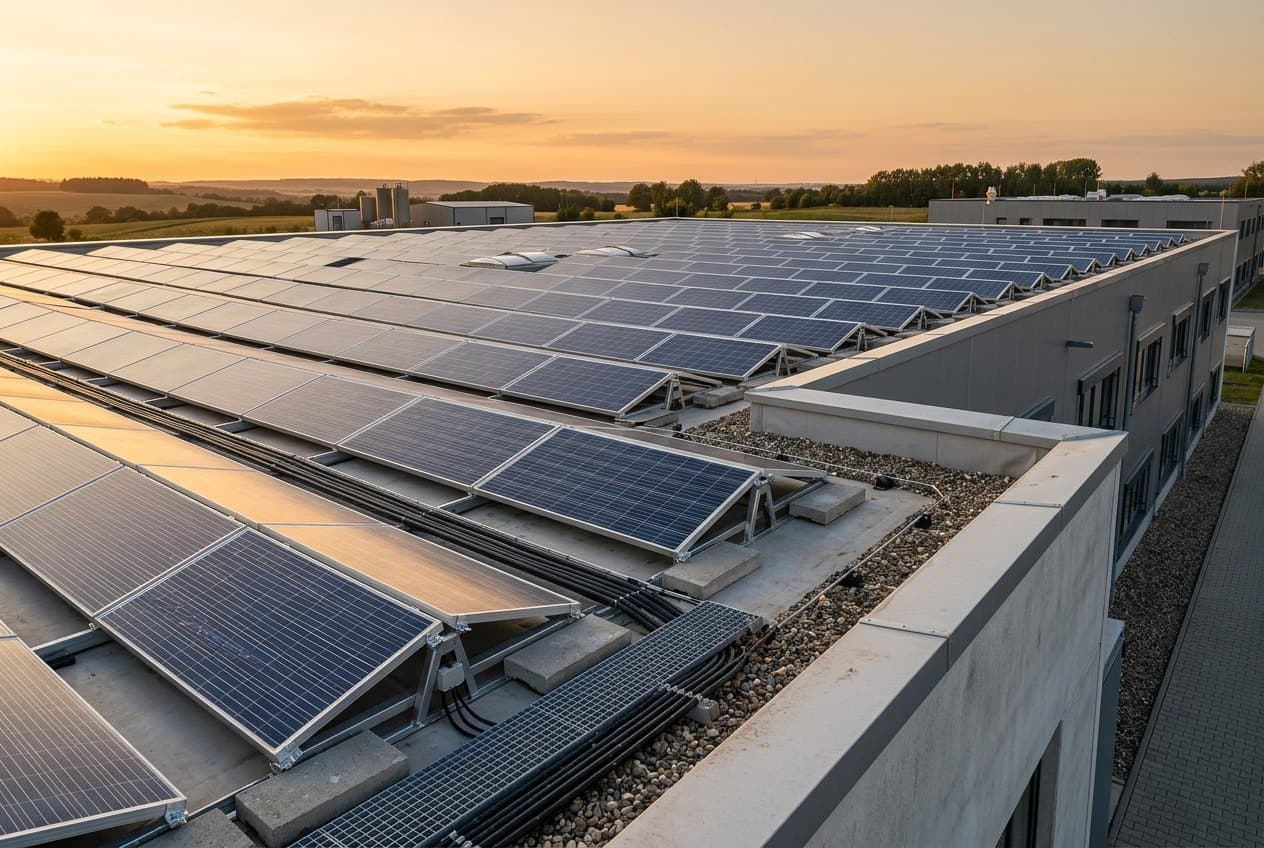
General ways to invest in solar assets
Participation in the energy transition is now possible in a variety of ways. Below is an overview of the most common investment forms:
Solar direct investment
Acquisition of an entire system (e.g. on a commercial rooftop) or a technically independent part of an installation (e.g. an inverter unit within a large-scale ground-mounted solar plant). Revenues are generated from the sale of electricity. This type of investment may offer certain tax advantages.
Solar equity fund
Investment in publicly listed companies within the solar sector (e.g. module manufacturers, project developers, or independent power producers). High liquidity, but also high volatility. No direct exposure to specific solar assets.
Solar bonds or loans
Typically fixed-interest securities or loans issued by project developers or energy companies. The interest rate and term are fixed, and the risk profile depends on the creditworthiness of the issuer.
Energy cooperatives
Community-based projects with a regional focus, in which members contribute capital and are granted participation rights. Returns depend on the success of the underlying project.
Crowdinvesting
Online platforms pool numerous small investments to finance a specific project. They offer a low entry threshold, but typically come with a less transparent risk–return profile and limited influence for investors.
Solar installation for self-consumption
Installation on one’s own residential rooftop to reduce electricity costs. Economically attractive, but only feasible for property owners.
Advantages of solar direct investments
Investments in solar installations in Germany represent a secure, predictable and attractive investment opportunity:
- Attractive and stable returns: Guaranteed income from the sale of solar electricity through 20-year government-backed feed-in tariffs (EEG) or long-term power purchase agreements (PPAs)
- Low risk: Mature and globally proven technology, low maintenance requirements, comprehensive insurance coverage, and long-term management and lease agreements
- Exceptional tax advantages: The investment deduction allowance and accelerated depreciation in the initial years reduce the required equity capital
- Sustainable investment: Active and direct support of the energy transition, with positive environmental impact through the reduction of greenhouse gas emissions and dependence on fossil fuels
- Diversification: Solar investments can help diversify an investment portfolio alongside shares, real estate and commodities, thereby spreading risk
How does a solar investment differ from other types of investment?
| Solar asset | Real estate | Rohstoffe | Shares/funds | |
|---|---|---|---|---|
Tangible asset | ✓ | ✓ | ✓ | – |
| Ongoing income | ✓ | ✓ | – | Partially (dividends) |
| High level of predictability | ✓ | Moderate | – | – |
| Tax benefits | ✓ | Moderate | – | – |
| Low administrative effort | ✓ | – | ✓ | ✓ |
Why are direct investments in solar assets in Germany attractive for private investors?
Germany offers a particularly investor-friendly framework for solar projects. The feed-in tariff under the Renewable Energy Sources Act (EEG) guarantees minimum prices for generated electricity over a period of 20 years. In addition, the capital requirement can be significantly reduced through targeted tax structuring.
A key instrument is the investment deduction allowance ("Investitionsabzugsbetrag" – IAB) pursuant to §7g of the German Income Tax Act (EStG). It allows up to 50% of the planned investment costs to be claimed for tax purposes before the asset is acquired. As a result, the investment can often have a significantly positive impact on an individual’s tax burden as early as the first year.
Process of investing in solar assets
A direct investment in a solar asset typically follows a structured process:
Step 01
Project review
Analysis and selection of a suitable project – for example, a rooftop system on an industrial building – including technical due diligence, yield forecast and financial viability assessmentStep 02
Structuring and tax planning
Commercial structuring depending on the chosen investment model (e.g. establishment of a sole proprietorship or participation in an operating company); optional formation of an investment deduction allowance (IAB) and obtaining a financing commitment from a bank – if desiredStep 03
Contract closing
Execution of the relevant agreements, in particular the purchase agreement, lease agreement, insurance and maintenance agreements, and, where applicable, a direct marketing agreementStep 04
Financing and payment processing
Conclusion of a bank loan (optional) and payment of the purchase price in accordance with the agreed project milestones or upon acquisition of an existing assetStep 05
Construction and commissioning
Installation by a qualified specialist contractor in the case of a new assetStep 06
Operation, maintenance, and distribution of revenues
Technical and commercial management is typically handled by a service provider – meaning investors have no operational efforts
Further information
Do you have questions regarding financial viability, tax treatment or the practical implementation?
You will find further detailed information in our guide & FAQ section.
Alternatively, contact us directly – without obligation and in complete confidence: